

Sponge rubber or cellular rubber: what is the difference?
Open or closed cell, EPDM or NR, round or self-adhesive – how to choose the right seal for doors, hatches and cabinets.
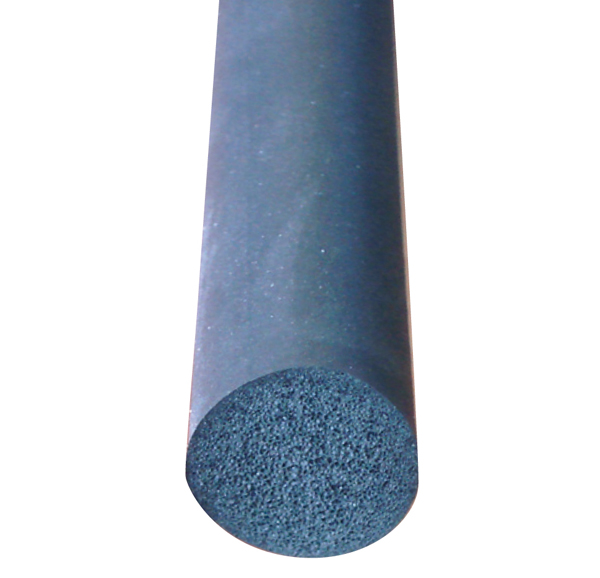
Sponge rubber and cellular rubber are soft, compressible rubbers full of small air cells. They seal joints against water, draughts, dust and noise, and dampen vibration. You find them in boat hatches and doors, motorhomes, cabinets, machines and enclosures. But which type should you choose, and what is the difference? This blog explains.
View our range of sponge rubber and cellular rubber.
In this article
1. Open cell or closed cell?
Closed cell
The air cells are not connected. The rubber does not absorb water and stays watertight. The best choice for outdoor use, on board and wherever moisture is present.
Open cell
The cells are interconnected, like a sponge. Very soft and breathable, but it absorbs water. Only suitable for dry applications, such as indoor sound damping.
Our range: all our sponge and cellular rubber profiles are made of EPDM with a closed-cell structure, so they are watertight and suitable for outdoor use.
2. Sponge rubber and cellular rubber: the difference
In practice, both names are often used interchangeably. The main difference lies in how the material is made:
Sponge rubber
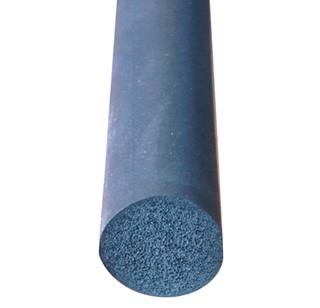
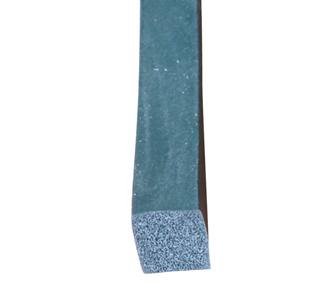
Is extruded into a fixed shape and has a closed skin on the outside. This makes the profile dimensionally stable and more wear-resistant. Ideal for round, square and special profiles that sit in a rebate or groove. Our sponge rubber meets ISO 3302-1 class E3 and is very soft (approx. 15° Shore 00).
Cellular rubber
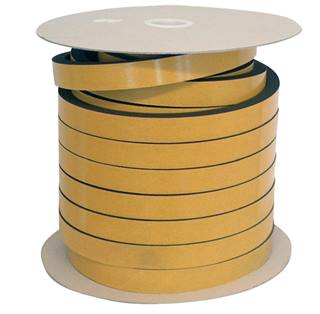
Is cut from sheet or block and therefore has open cut edges. It is mainly supplied as a flat strip, often self-adhesive. Ideal for sealing flat joints, for example under a lid, panel or hatch.
3. EPDM or natural rubber (NR)?
EPDM resists UV, ozone, rain and temperatures from –40 to +100 °C. It hardly ages and is therefore the standard for seals outdoors and on board. Natural rubber (NR) is very elastic but less resistant to UV and ozone, so it is mainly suitable for indoor use. Both have only moderate oil resistance; for oil, choose an NBR or neoprene profile.
4. Which profile should you choose?
Round
In a groove or rebate, for example on hatches and doors. Round sponge rubber, from 6 to 30 mm.
Square and rectangular
For flat seals with a larger contact area. Square or rectangular.
Self-adhesive D-profile
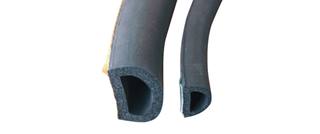
Sticks directly onto door or frame; the rounded side compresses. D-profile self-adhesive.
Flat strip
For lids, panels and flat joints. Self-adhesive cellular rubber strip, also 50 mm wide.
Rule of thumb: choose a profile that is compressed by about 25 to 40% when the door or hatch is closed. Too little compression causes leaks; too much makes closing hard and wears the seal faster.
5. Fitting self-adhesive sponge and cellular rubber
- Make the surface clean, dry and grease-free, for example with isopropyl alcohol.
- Avoid low temperatures: the adhesive bonds best at room temperature.
- Peel the backing off bit by bit and press the profile firmly in place. Do not stretch it, or it will shrink back later.
- Let the bond cure before loading the door or hatch; the adhesive reaches full strength after about a day.
6. Frequently asked questions
Is cellular rubber watertight?
Closed-cell cellular rubber does not absorb water and therefore seals watertight. Open-cell rubber soaks up water like a sponge. Our EPDM cellular rubber is closed-cell.
What is the difference between sponge rubber and cellular rubber?
Sponge rubber is extruded into a fixed shape and has a closed skin; it is dimensionally stable and suitable for round and special profiles. Cellular rubber is cut from sheet and is mainly used as a flat, often self-adhesive strip.
Which sponge rubber is suitable for outdoor use and on board?
Closed-cell EPDM. It resists UV, ozone, salt water and temperatures from –40 to +100 °C.
Where can I buy sponge rubber?
At DG Rubber Holland you can easily order sponge rubber and cellular rubber online – round, square, rectangular, D-profile and as self-adhesive strip. Ordered before 14:00 = shipped today.
Need a custom size or special profile? Contact our specialists – we are happy to help you find the right seal.
Read also
Related products
Cable calculator
Which cable size do I need?
Enter voltage, current and length and instantly see the right battery cable and cable lugs.
Rubber profiles
From stock or made to measure
Can't find your profile? Then we'll have it made. Through our sister company DG Rubber Profiles we also supply custom profiles, made to your drawing or sample.
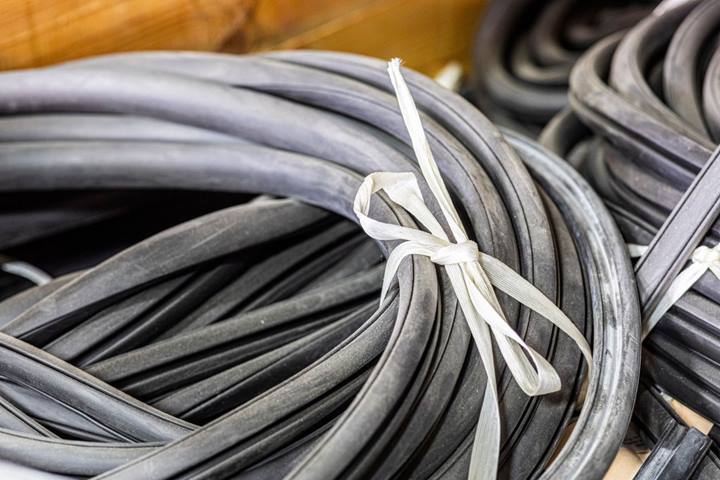

Standard profiles at DG Rubber Holland
- Window rubber, sponge rubber, cellular rubber, self-gripping profiles and bumper strips
- Ordered before 14:00, usually delivered the next working day
- Order online straight away at your own prices

Custom work through DG Rubber Profiles
- Profile to your drawing, sample or idea
- Over 4400 dies, own production in the Netherlands
- In TPE, EPDM or silicone, in small and large series
- 1Drawing or sample
- 2Advice and quote
- 3Production and delivery
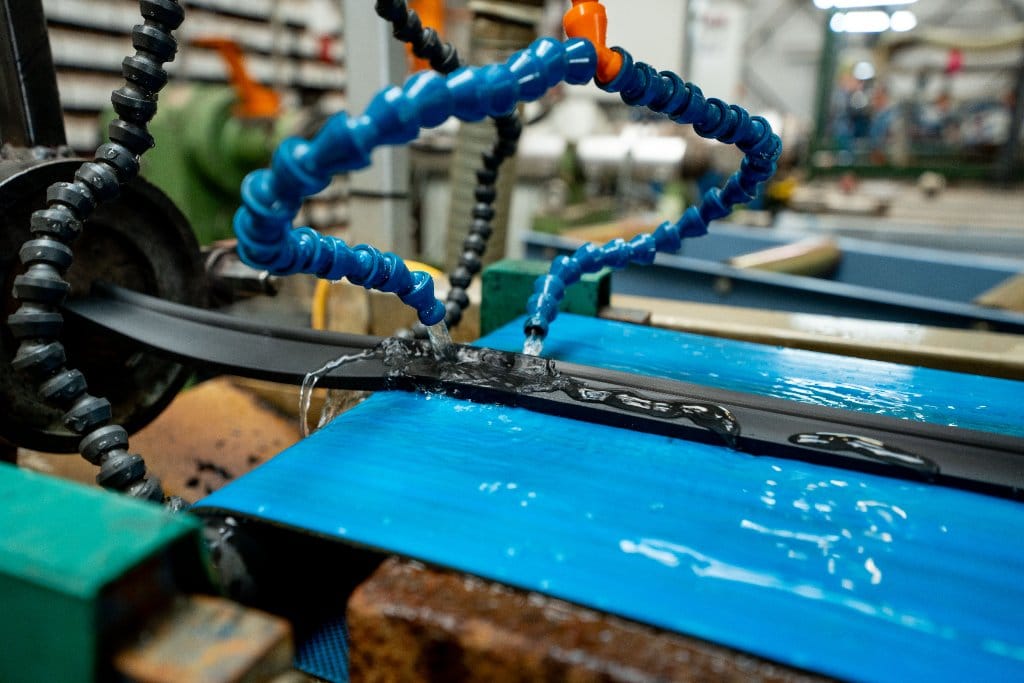
Need advice for your project?
Contact our technical experts. In urgent cases we will help you as quickly as possible.
