

Choosing heat shrink tubing: which size fits your cable?
Shrink ratio, adhesive lining and a size chart from 1.5 to 70 mm² – choose the right heat shrink tubing straight away.
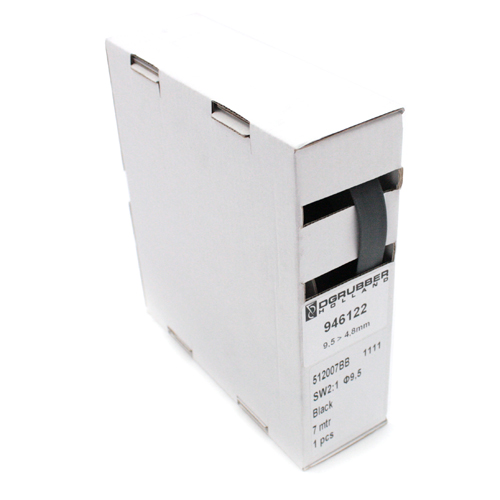
Heat shrink tubing is used almost everywhere cables are connected: around a cable lug, over a splice or as a colour marking for positive and negative. Yet choosing the size often goes wrong. If the tubing is too tight, it will not fit over the cable lug. If it is too wide, it will not shrink tightly enough around the cable. In this blog you will learn how to choose the right heat shrink tubing, with a size chart for cables from 1.5 to 70 mm² and larger.
You will find all sizes in our heat shrink tubing category.
In this article
1. What does heat shrink tubing do?
Heat shrink tubing is a plastic tube that shrinks when heated. It:
- insulates bare parts, such as the transition from cable to cable lug;
- protects against chafing, moisture and dirt;
- relieves strain on the cable at the connection, so the strands are less likely to break due to vibration;
- marks polarity: red for positive, black for negative.
2. The shrink ratio: 2:1 or 3:1
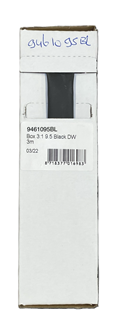
Every heat shrink tube has two dimensions: the inner diameter as supplied and the inner diameter after shrinking. For 9.5 – 4.8 mm tubing, the diameter is 9.5 mm as supplied and 4.8 mm after shrinking. It shrinks to half its size: a shrink ratio of 2:1.
Our adhesive-lined heat shrink tubing has a ratio of 3:1 and shrinks to one third of its original diameter. This allows it to bridge a larger difference between a thick cable lug and a thinner cable.
Rule of thumb: the supplied diameter must be larger than the thickest part the tubing has to pass over (usually the cable lug), and the shrunk diameter smaller than the thinnest part it has to grip tightly (the cable sheath).
3. With or without adhesive lining?
2:1
Without adhesive
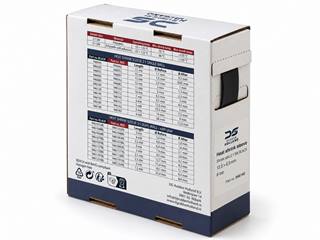
Thin-walled and flexible. For insulation, marking and protection in dry locations, such as a control cabinet or vehicle interior. Good value on a roll in a handy dispenser box.
3:1
With adhesive
The inside is lined with adhesive that melts while shrinking and fills the gap between tubing and cable. The connection becomes watertight and the tubing stays firmly in place.
Choose adhesive-lined tubing for:
- boats and yachts (salt water, condensation);
- connections outdoors, under a vehicle or in the engine bay;
- battery cables with cable lugs, where corrosion is the biggest enemy.
4. Size chart: which tubing for which cable size?
What is your cable size?
Where is the connection?
Always check that the supplied diameter fits over your cable lug. If in doubt, choose one size larger.
Choose your cable size above.
These sizes apply to tubing without adhesive (2:1). Sizes are shown as supplied diameter – shrunk diameter.
1,5 mm²
Heat shrink 3,2 – 1,6 mm
2,5 – 4 mm²
Heat shrink 4,8 – 2,4 mm
4 – 6 mm²
Heat shrink 6,4 – 3,2 mm
10 – 16 mm²
Heat shrink 9,5 – 4,8 mm
25 mm²
Heat shrink 12,7 – 6,4 mm
35 mm²
Heat shrink 15,9 – 8 mm
50 mm²
Heat shrink 19,1 – 9,55 mm
≥ 70 mm²
Heat shrink 25,4 – 12,7 mm
The smallest sizes (1.2, 1.6 and 2.4 mm) are suitable for thin signal wires and finishing soldered joints.
We stock adhesive-lined tubing (3:1) in 3.2, 4.8, 6.4, 7.9, 9.5, 12.7, 15.4, 19.1 and 25.4 mm. Because it shrinks further, you can often choose one size larger for the same cable, making it easier to slide the tubing over a cable lug.
Looking for 50 mm heat shrink? You usually mean tubing for a 50 mm² cable. The right size for that is 19.1 – 9.55 mm.
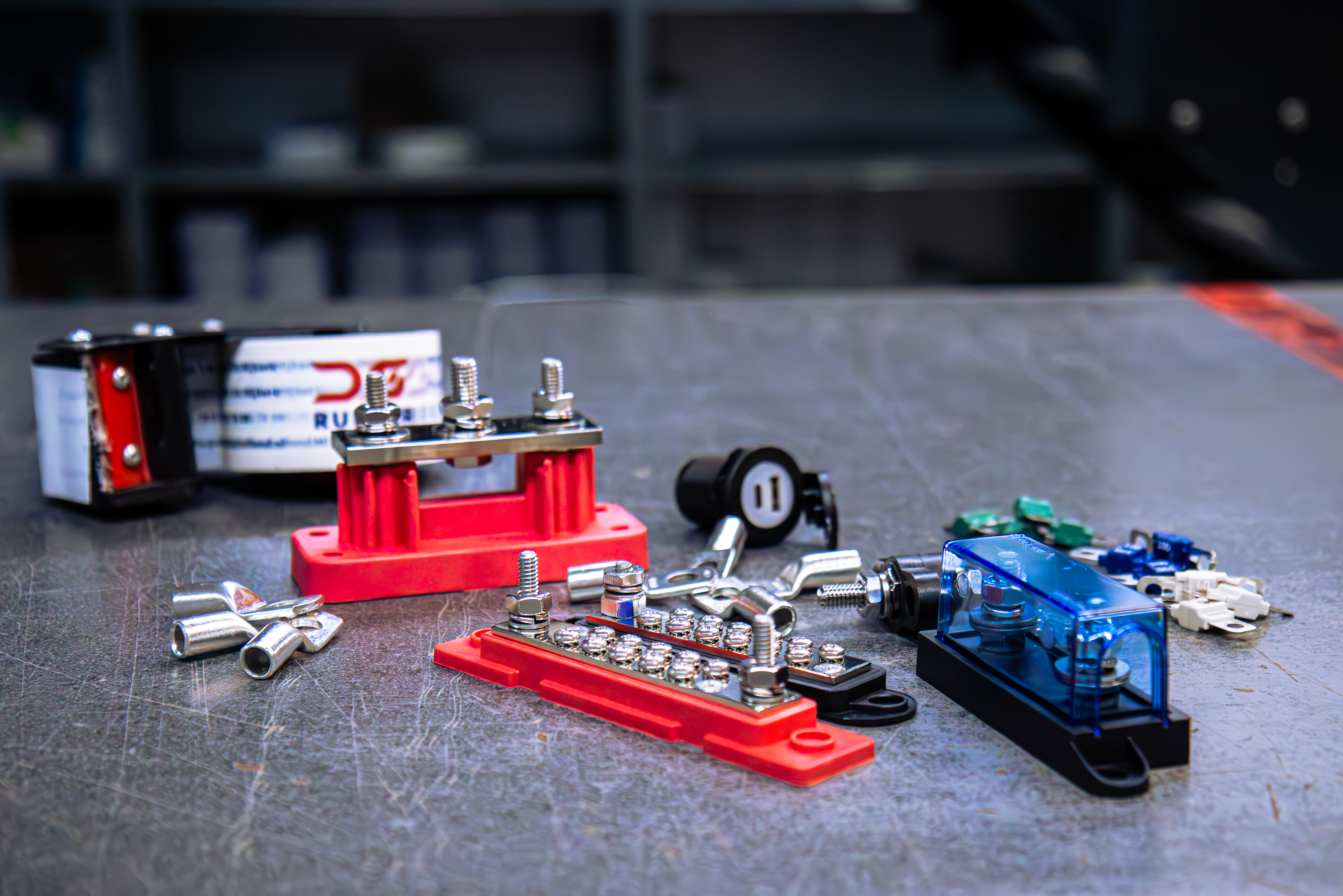
Not sure? With the cable lug selector you choose the cable size and stud size and instantly see the matching cable lug, heat shrink and fuse.
5. How to fit heat shrink tubing correctly
- Slide the tubing onto the cable first, before crimping the cable lug. This is often forgotten.
- Crimp the cable lug with a suitable crimping tool.
- Slide the tubing over the connection, overlapping both the cable sheath and the cable lug.
- Heat evenly with a heat gun. Start in the middle and work towards the ends so no air is trapped. Avoid an open flame: it easily burns the tubing.
- For adhesive-lined tubing: keep heating until a small bead of adhesive appears at both ends. Then you know the connection is watertight.
- Let the connection cool down before bending or loading the cable.
6. Colours: mark your polarity
We supply tubing without adhesive in black, red, blue and brown, and adhesive-lined tubing in black and red. Use red on the positive side and black on the negative side. That way you can see at a glance how battery and loads are connected, which prevents mistakes during maintenance and battery replacement.
7. Frequently asked questions
Which heat shrink fits a 50 mm² cable?
For a 50 mm² cable, use 19.1 – 9.55 mm tubing (2:1). With adhesive, choose 19.1 – 6.4 mm (3:1); do check that the supplied diameter fits over your cable lug.
What does a shrink ratio of 2:1 or 3:1 mean?
The ratio indicates how much the tubing shrinks. At 2:1 the diameter halves, at 3:1 it shrinks to one third. The higher the ratio, the larger the difference between cable lug and cable the tubing can bridge.
When do I need adhesive-lined heat shrink?
Use adhesive-lined tubing wherever moisture, salt water or dirt can reach the connection: on board, outdoors, under a vehicle and on battery cables. The adhesive makes the connection watertight and prevents corrosion.
Can I shrink heat shrink tubing with a lighter?
In an emergency, yes, but we advise against it. An open flame heats unevenly and quickly burns the tubing. With a heat gun the tubing shrinks evenly and the adhesive melts completely.
Need advice? Our technical experts are happy to help you find the right combination of cable, cable lug and heat shrink.
Read also
Related products
Cable calculator
Which cable size do I need?
Enter voltage, current and length and instantly see the right battery cable and cable lugs.
Rubber profiles
From stock or made to measure
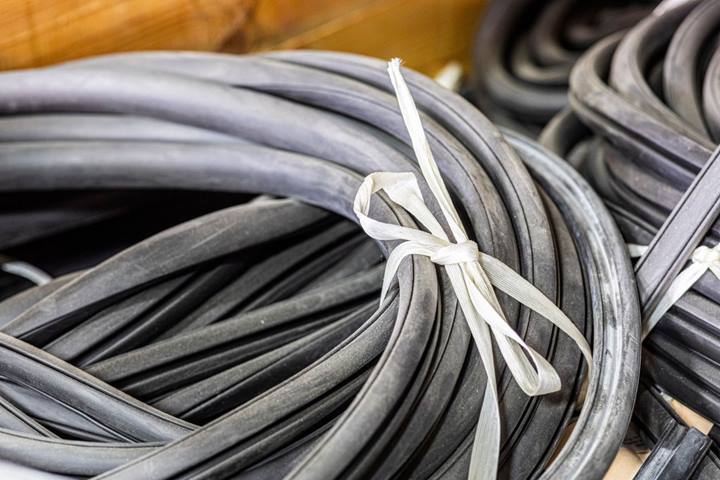
Can't find your profile? Then we'll have it made. Through our sister company DG Rubber Profiles we also supply custom profiles, made to your drawing or sample.

Standard profiles at DG Rubber Holland
- Window rubber, sponge rubber, cellular rubber, self-gripping profiles and bumper strips
- Ordered before 14:00, usually delivered the next working day
- Order online straight away at your own prices

Custom work through DG Rubber Profiles
- Profile to your drawing, sample or idea
- Over 4400 dies, own production in the Netherlands
- In TPE, EPDM or silicone, in small and large series
- 1Drawing or sample
- 2Advice and quote
- 3Production and delivery
Need advice for your project?
Contact our technical experts. In urgent cases we will help you as quickly as possible.
